
I have often been branded as dramatic, but I think it is safe to say that we are in the largest oil shock in history, a view also shared by the International Energy Agency, which has characterised this as the “greatest global energy security challenge in history.”
This shock has now reached 31 days. With some experts saying that if this extends to three to four months it becomes a systemic problem for the world.
The market has been shielded by a number of supply buffers, but they are being depleted.
The demand picture
Global oil demand sits at approximately 103 million barrels per day, with transport accounting for roughly half of all consumption. Despite meaningful EV adoption, road fuel growth has slowed but not reversed. Transport remains almost entirely oil dependent and is still the single largest consumer of every barrel produced.
The new kid on the block and the fastest growing oil segment is petrochemicals. Petrochemical feedstock currently accounts for 12% of global oil demand, covering plastics, fertilisers, packaging, clothing, digital devices, medical equipment and detergents, and this share is expected to increase. Between 2019 and 2024, consumption of oil-based feedstocks increased by an estimated 2.3 million barrels per day, accounting for more than 95% of net growth in overall oil demand. By 2030, the petrochemical industry is on track to consume one in every six barrels of oil produced globally.
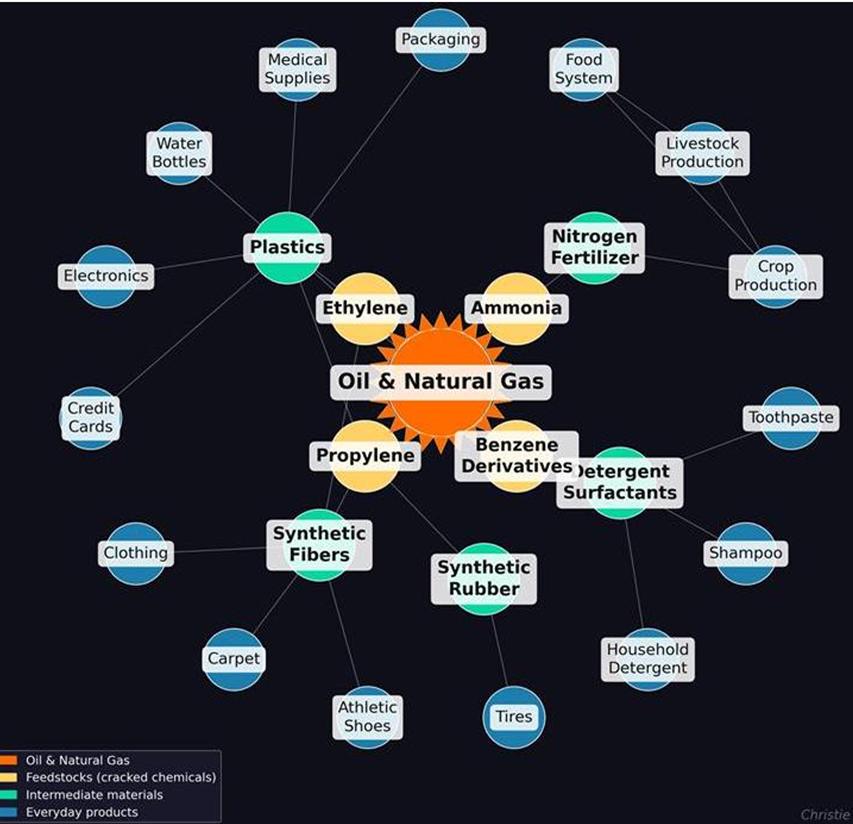
Even as renewables advance, oil and its derivatives remain structurally embedded in the global economy and growth in ways that cannot be unwound quickly.
Talk to me Strait (of Hormuz)
In 2025, nearly 20 million barrels per day of oil transited the Strait of Hormuz, representing approximately 20% of global oil consumption and around 34% of globally traded crude oil. Most of these exports were destined for Asia, with China and India alone accounting for 44% of all Hormuz crude flows.
To contextualise the scale: global oil demand fell 2–3% during the GFC and approximately 10% during COVID, both of which caused severe economic disruption. A closure removing 20% of global supply is without modern precedent.
A number of short-term buffers have been deployed to offset the burden, but they are being rapidly depleted. These are emergency measures and once exhausted it is not clear what other tools exist to prevent prices from moving sharply higher.
The refinery bottleneck
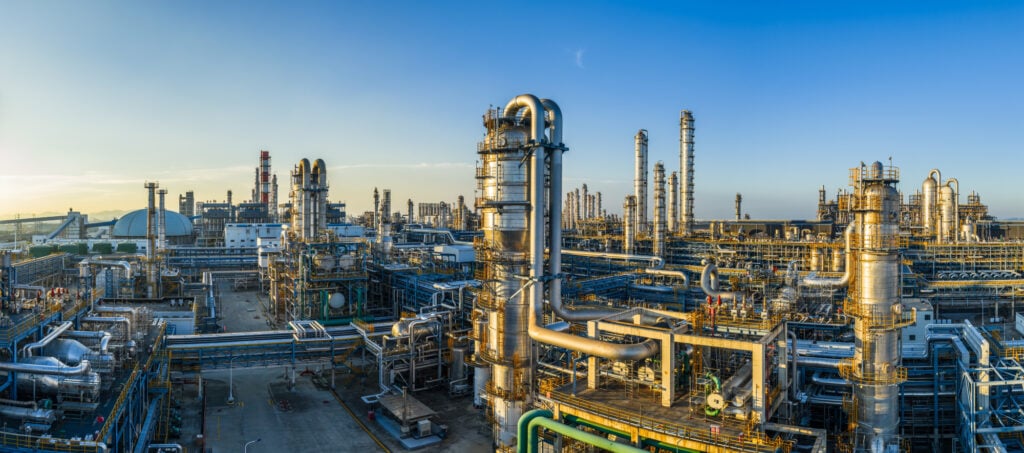
One of the least understood dimensions of this conflict is the operational constraint it places on oil refineries. Refineries are not taps that can be turned on and off. They are highly integrated industrial facilities operating across multiple sequential stages, distillation, conversion, treatment and blending, all of which must run simultaneously with sufficient crude flowing through to maintain precise temperature, pressure and chemical conditions at every stage.
According to the American Fuel and Petrochemical Manufacturers, there is a technical floor known as the “turndown rate” the lowest volume of crude a refinery can process while safely keeping all units operating, which sits at approximately 65 – 7 0% of total capacity. During the early phases of the COVID-19 lockdowns, US refinery utilisation dropped to 68%, right at that technical threshold.
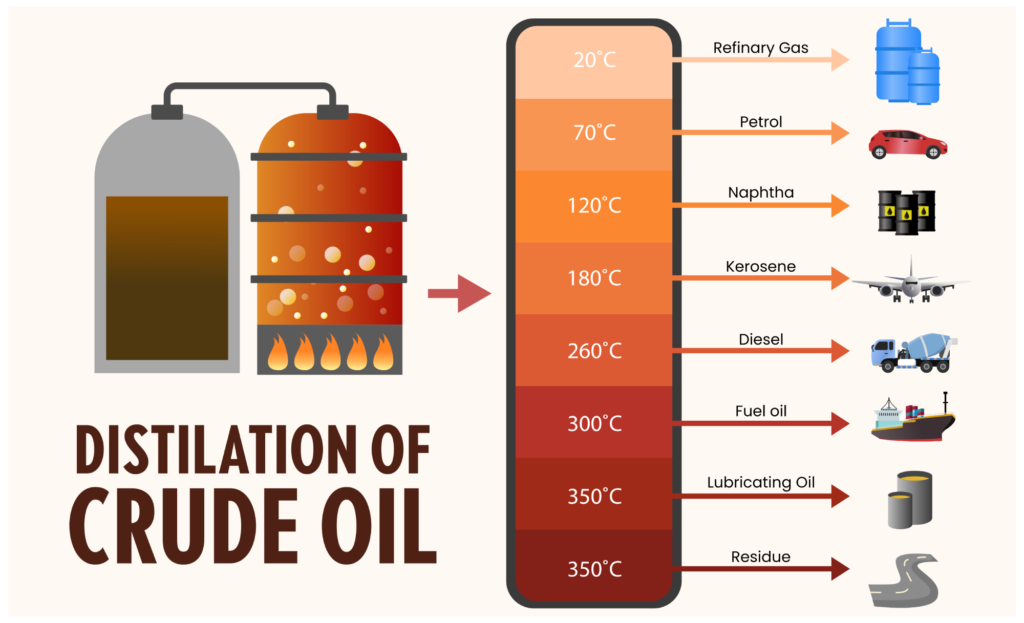
With supply uncertainty rising following the onset of the Iran conflict, refineries began scaling back runs within the first week. Should any refineries be forced into a full shutdown, returning idled capacity to safe operation would be so labour intensive and time consuming that any market impact would be years away, requiring machinery inspections, operating permits, staff reassembly and full supply chain reintegration. Even a diplomatic resolution tomorrow would leave the world facing months of constrained refined product supply.
Brent, which prices most internationally traded crude, is reacting directly to fears of supply disruption across the Middle East, while WTI reflects a US market with growing domestic production and relatively insulated inland supply. Brent crude futures settled at $112.78 per barrel on Monday 30 March, marking a record monthly surge of approximately 55% for March, the largest monthly gain since the contract began in 1988. WTI settled at $102.88, recording its first close above $100 since July 2022.
The spread between the two has narrowed significantly from the $10 per barrel gap seen earlier in the month, as WTI has caught up, itself a signal that even the relatively insulated US market is now feeling the pressure.
The United States is largely self-sufficient in crude oil production, running domestic refineries at 90%+ utilisation on domestic supply. However, US producers are incentivised to export crude when Brent prices rise sufficiently above the Gulf Coast price, meaning even a self-sufficient producer is not insulated from global price dynamics. For US crude exports to be economically viable, the price of Brent must be higher than the price on the US Gulf Coast, and at current levels that threshold is being met decisively.
What does this mean?
Across Asia-Pacific, governments are already in crisis mode, Pakistan has introduced a four-day work week and closed schools, Sri Lanka is rationing fuel to 15 litres per week, Thailand has intervened to stabilise prices, and the Philippines declared a national energy emergency.
Closer to home, Australia and New Zealand are more exposed than most realise. Australia holds the smallest fuel stockpiles of any IEA member nation, has only two remaining refineries, and has seen domestic oil production dwindle significantly over 25 years. New Zealand has no onshore refining capacity at all. As NZ Foreign Minister Winston Peters bluntly put it, both countries were “far too cocky” about their energy security.
The UN’s Asia-Pacific development arm estimates regional inflation could rise to 4.6% in 2026, up from 3.5% in 2025, with economic growth slowing across the region. For central banks including the RBA, this creates an impossible tension, inflation was already running hot before the conflict began, and oil above $110 per barrel makes it worse. But raising rates cannot reopen the Strait of Hormuz. The risk of stagflation is no longer theoretical; the ECB has already warned that major European economies could be pushed into technical recession by year end.
As Jeff Currie of Carlyle Group put it, the world may be about to get the energy transition forced upon it, in a very painful way, and very quickly.
From the desk of IGB
Source post: Blackbull Research - Substack